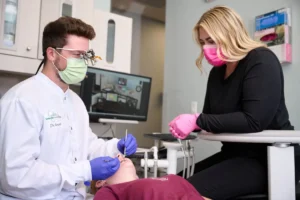
You notice it at night. Your child sleeping with their mouth wide open, snoring softly, waking up groggy even after a full night’s rest. Or their dentist mentioned something about tongue position. Their orthodontist flagged a tongue thrust pushing against their braces. Maybe their lips never quite seem to close naturally when they’re relaxed.
These aren’t random quirks. They’re signs of orofacial myofunctional disorders, specifically patterns in how the muscles of the mouth, tongue, and face function, and they respond well to a gentle, non-invasive treatment called myofunctional therapy. At Frenchtown Dental, we work with families in Frenchtown and Missoula to address these patterns at the source, before they create bigger dental and health challenges down the road.
Here’s what every parent should understand about these signs and what can be done about them.
What Is Myofunctional Therapy?
Myofunctional therapy is a program of targeted oral exercises that retrains and strengthens the muscles of the mouth, tongue, lips, and face. These are the muscles responsible for breathing, chewing, swallowing, and speaking. When they develop poor habits or patterns during childhood, the effects show up in unexpected ways across dental health, sleep quality, and even posture.
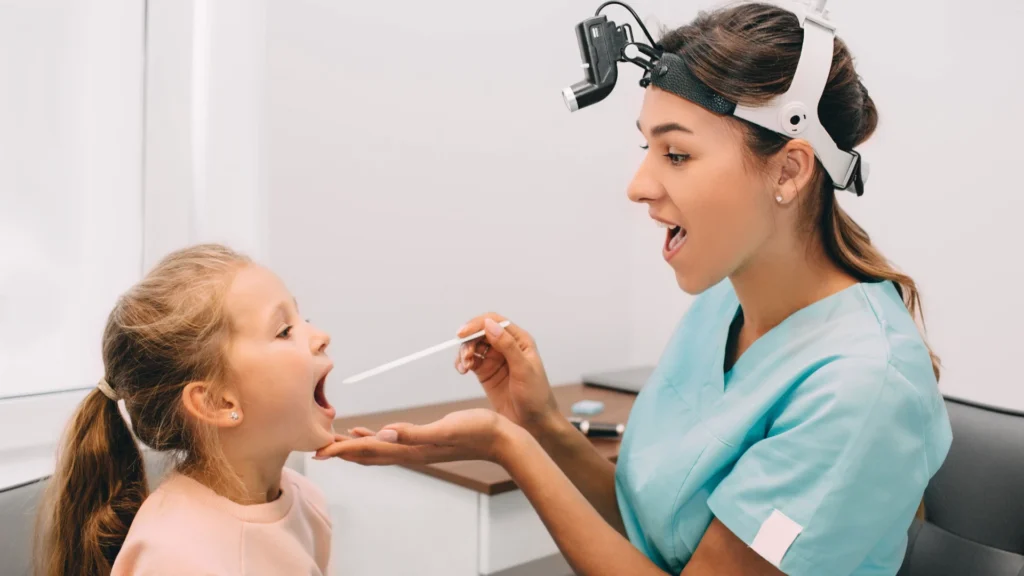
A child who breathes through their mouth, for example, isn’t just breathing differently. That single pattern can affect dental arch development, sleep quality, facial structure, and airway health over the course of years.
The earlier these patterns are identified, the easier they are to correct. Myofunctional exercises are gentle, easy to learn, and designed to be practiced at home as part of a daily routine. Our dentistry team can assess whether your child shows signs of these patterns and whether myofunctional therapy is the right starting point.
Signs Parents Often Notice First
Most families find their way to myofunctional therapy because something feels off. A pediatrician raises a concern, an orthodontist asks about tongue habits, or a parent simply notices their child never seems rested. These are the most common patterns we see and assess at Frenchtown Dental.
Mouth Breathing
Nasal breathing is the body’s default design. The nose filters, warms, and humidifies air before it reaches the lungs. When a child breathes through their mouth habitually, that process gets bypassed. Chronic mouth breathing is associated with dry mouth, higher rates of tooth decay, bad breath, and disrupted sleep. Many parents notice it most at night, but daytime mouth breathing carries the same risks and deserves equal attention. Our pediatric airway evaluations are specifically designed to assess these kinds of breathing patterns in children.
Mouth Breathing at Night
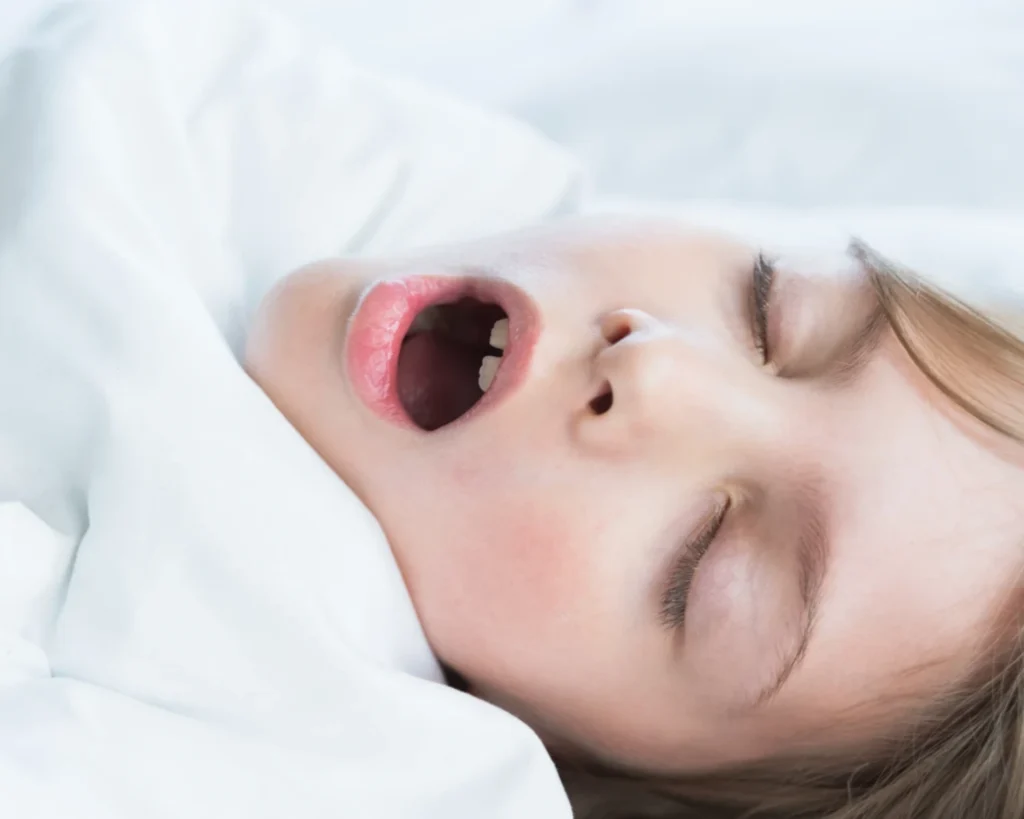
Nighttime mouth breathing is one of the most frequent reasons families seek out a myofunctional therapist. Symptoms include snoring, frequent waking, teeth grinding, and daytime fatigue despite a full night in bed. When the muscles supporting the airway are strengthened and the body learns to breathe through the nose during sleep, sleep quality improves for the child and often the rest of the household as well. If sleep disruption is a significant concern, it’s also worth exploring whether sleep apnea or broader airway therapy is part of the picture.
Low Tongue Posture and Incorrect Tongue Posture
At rest, the tongue should sit gently against the roof of the mouth, what is known as the palate. When the tongue rests low on the floor of the mouth instead, this is called low tongue posture, and over time it contributes to narrow dental arches, crowded teeth, and bite problems. Correct tongue posture is one of the first habits myofunctional therapy works to establish because it influences so many other outcomes.
Tongue Thrust
Tongue thrust happens when the tongue pushes forward against or between the teeth during swallowing, speaking, or while at rest. This kind of repeated pressure gradually shifts teeth out of position. For children already in orthodontic treatment, tongue thrust and braces create a persistent conflict: the braces apply corrective force while the tongue works in the opposite direction. Addressing tongue thrust directly makes orthodontic results more stable and more lasting.
Improper Swallowing
A proper swallow involves the tongue pressing upward against the palate with the lips closed. When tongue thrust disrupts this pattern, swallowing puts pressure on the teeth and jaw in ways it shouldn’t. Over time this contributes to dental misalignment and jaw discomfort. Retraining the swallowing pattern is a foundational part of myofunctional therapy, and many families report noticeable improvement within the first few weeks of practice.
Poor Lip Seal
When the lips rest apart rather than together, it usually signals that nasal breathing hasn’t been established as a habit, or that something is making nasal breathing difficult. A proper lip seal at rest supports nasal breathing and healthy oral posture. Our team evaluates lip function as part of a broader airway and myofunctional assessment.
Why Tongue Posture Has Such a Big Impact on Dental Health
The tongue is one of the strongest muscles in the body relative to its size. It presses against the teeth and palate constantly throughout the day. When tongue posture is correct, that pressure supports healthy development of the dental arches and keeps the airway open. When tongue posture is low or incorrect, that same constant force contributes to narrow palates, crowded teeth, and greater need for orthodontic intervention later.
Addressing tongue posture early, ideally during childhood when the palate is still developing, reduces the complexity of treatment down the line. For families interested in supporting healthy jaw and palate development from an early age, our Healthy Start program works alongside myofunctional therapy to guide growth in the right direction.
How This Connects to Holistic Dental Care
Myofunctional therapy sits at the intersection of dental health, airway function, and whole-body wellness. At Frenchtown Dental, we practice holistic dentistry that looks at the mouth as part of a larger system. The way your child breathes affects sleep quality, and sleep quality shapes how they grow and function every day. The habits their oral muscles develop early create a foundation that either supports or complicates their health for years.
Families who are referred by a pediatrician, speech therapist, or orthodontist to find a myofunctional therapist often end up connecting with a holistic dentist for this reason. Holistic dental care addresses how oral function connects to the rest of the body, which makes it a natural home for myofunctional therapy.
Our consultations include a thorough assessment of your child’s breathing patterns, tongue posture, swallowing habits, and lip function. From there, we build a therapy plan that fits into daily life and is designed to produce results you can actually see.
Is Tongue Tie Part of the Problem?
In some children, myofunctional issues are connected to a tongue tie, a restriction of the lingual frenulum (the small band of tissue under the tongue) that limits tongue movement and makes proper tongue posture difficult or impossible to achieve. If your child has been assessed for a tongue tie or you’ve noticed their tongue doesn’t seem to move freely, it’s worth discussing this during your consultation.
We treat tongue ties at Frenchtown Dental and can assess whether a release would support better myofunctional outcomes.
Finding a Myofunctional Therapist in Missoula and Frenchtown
If you’ve been searching for a myofunctional therapist in the Missoula area, Frenchtown Dental is a short drive from the city and accepts new patients without a referral. We offer both in-office and virtual myofunctional therapy sessions, so families across western Montana can access care regardless of location. As a holistic family dentist serving Missoula and Frenchtown, we bring together airway, pediatric, and whole-body dental care under one roof, which means your child’s myofunctional therapy works alongside everything else we’re doing for their health.
Frequently Asked Questions About Myofunctional Therapy
What age is best to start myofunctional therapy?
Myofunctional therapy is effective for children and adults. For children, starting around age 5 or 6, when they’re old enough to follow instructions and practice independently, tends to produce strong outcomes. Earlier intervention generally means less complex correction.
Will myofunctional therapy help with braces?
Yes. Tongue thrust is one of the main reasons orthodontic results shift after treatment. Addressing the tongue habit through myofunctional therapy helps stabilize the outcome and supports more lasting results from braces or other orthodontic work.
How long does myofunctional therapy take?
Programs typically run six months to a year, depending on the individual’s habits and goals. Exercises are practiced daily at home and progress is reviewed at regular check-ins with our team.
Can adults benefit from myofunctional therapy?
Absolutely. While many families seek this therapy for their children, adults with chronic mouth breathing, snoring, jaw tension, or airway concerns can benefit significantly from myofunctional work as well.
Does Frenchtown Dental offer virtual sessions?
Yes. We offer virtual myofunctional therapy sessions for families who prefer remote care or who are located outside the Frenchtown and Missoula area.
Is myofunctional therapy covered by insurance?
Coverage varies depending on your insurance plan. Some plans cover myofunctional therapy when it is connected to a documented medical need, such as sleep-disordered breathing or orthodontic concerns. We recommend contacting your provider directly, and our front desk team is happy to help you understand your options before your first visit.
What is the difference between myofunctional therapy and speech therapy?
There is some overlap, but they serve different goals. Speech therapy focuses on correcting how sounds are produced. Myofunctional therapy focuses on retraining the resting posture and function of the tongue, lips, and facial muscles, which affects breathing, swallowing, and dental development. In many cases the two work well together, and some children benefit from both.
Is Myofunctional Therapy Right for Your Child?
Consider reaching out if your child is showing any of these signs:
- Breathing through their mouth during the day, at night, or both
- Snoring or restless, unrefreshing sleep
- A tongue that rests low in the mouth or pushes against their teeth
- Lips that stay parted at rest
- Difficulty swallowing comfortably
- Ongoing tooth shifting during or after orthodontic treatment
- Speech patterns that seem connected to tongue position
You don’t need a referral and you don’t need to arrive with a diagnosis. Our family dentistry team will walk through what we’re seeing, answer your questions, and let you know whether myofunctional therapy is a good fit. No pressure, no commitment required.
Schedule a Myofunctional Therapy Consultation at Frenchtown Dental
Frenchtown Dental serves families throughout Frenchtown and Missoula, Montana with holistic dental care that looks at the full picture of your child’s health. If you’ve been searching for a myofunctional therapist or a holistic dentist who understands airway and oral function, we’d love to connect.
Reach out to our team and we’ll walk you through what we’re seeing and what your options are.